


Plastic Chopping Board with Handle, Solid Food-Grade Plastic
This plastic chopping board with handle is made from solid, food-grade plastic, as the listing states, with a cut-out handle at one end so it is easy to lift, carry to the pan and hang up. The smooth, non-porous surface does not soak up juices or smells, it is gentle on knife blades, and it is dishwasher-safe, so it is quick to clean after raw meat, fish, garlic or onions.
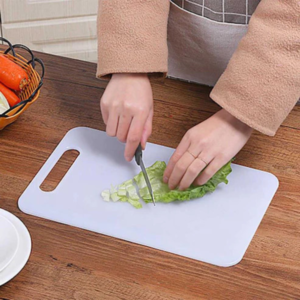
The photos show it in everyday use: chopping spring onions, slicing tomatoes and cutting raw meat with a chef’s knife, on a clean white board that sits flat on the worktop.

Key features of the plastic chopping board with handle
- Material: solid food-grade plastic
- Colour: white, as shown in the photos
- Handle: cut-out hand grip at one end
- Surface: smooth and non-porous
- Knives: gentle on blades, helps reduce dulling
- Cleaning: dishwasher-safe
- Use: fruit, vegetables, meat, fish and bread
Why choose plastic
A plastic board is light, easy to move around the kitchen and simple to keep clean. Because the surface is non-porous, juices from meat, beetroot or tomatoes sit on top instead of soaking in, and strong smells such as garlic, onion and fish wash away rather than lingering for the next job.
Plastic is also kinder to knives than glass, stone or ceramic boards, which can blunt an edge in a few strokes. A good knife on a plastic board stays sharper for longer.

Using the handle
The cut-out handle is more useful than it looks. Hold the board by the handle to tip chopped vegetables straight into a pan or a bowl, carry it from the worktop to the hob without spilling, and hang it on a hook to dry and save drawer space. It also gives you a firm grip when you rinse the board under the tap.

Raw meat and food hygiene
Food safety advice is to keep raw meat and fish apart from foods that will not be cooked, such as salad, fruit and bread. Many cooks keep one board for raw meat and another for everything else, or wash the board thoroughly in hot, soapy water or the dishwasher between jobs. A non-porous plastic chopping board with handle makes that easy, because nothing soaks into the surface.
Read more about avoiding cross-contamination from the Food Standards Agency.
Cleaning and drying
After each use, scrape off food, then wash the board in hot, soapy water or put it in the dishwasher. Rinse it, stand it on its edge or hang it by the handle, and let it dry fully before you put it away. For stubborn smells, a paste of bicarbonate of soda and water, or half a lemon rubbed over the surface, freshens it up before a normal wash.
Protecting your worktops
Cutting straight onto a worktop scratches the surface and blunts your knives, and on a laminate worktop deep cuts can let water into the core. Always chop on a board, and keep the plastic chopping board with handle out on the side so it is ready to use. Browse our kitchen worktops and upstands if you are planning a new kitchen.
Keeping it steady
A board that slides around is a board that causes accidents. If your worktop is very smooth, lay a damp cloth or a sheet of kitchen paper underneath the board before you start chopping, and it will grip the surface. Keep the board close to the front of the worktop so you are not reaching, and keep your fingers tucked in as you slice.
When to replace a chopping board
Every chopping board picks up knife marks over time. Light marks are normal, but once a plastic board has deep grooves that are hard to clean, it is time for a new one. Many households replace their everyday boards every year or two, and keep a fresh one for raw meat.
Pairing with other boards
A plastic chopping board with handle is the everyday workhorse for chopping, while a marble board is lovely for rolling pastry and serving cheese. Browse our chopping boards to find the right board for every job in your kitchen, from quick slicing to entertaining.
Choosing a chopping board
Think about what you cut most. For quick daily jobs a light plastic chopping board with handle is ideal: it is easy to lift, easy to wash and easy to store. Wood looks warm and suits bread and serving, and stone suits pastry, but neither can go in the dishwasher. A plastic board is the practical choice for raw meat and strong-smelling foods, because it can be washed hot and thoroughly after every use.
Storing your board
Hang the plastic chopping board with handle by its handle on a hook or rail, or stand it upright in a rack, so air can reach both sides and it dries completely. Avoid stacking a damp board flat in a cupboard. Keeping it within reach of the worktop means you will always use a board rather than cutting straight onto the surface.
Everyday uses
Use it for dicing onions and peppers for a curry, slicing tomatoes and cucumber for a salad, trimming chicken or steak, cutting bread, preparing fruit for a lunch box, or chopping herbs for a garnish. A white plastic chopping board with handle also makes it easy to see what you are cutting, and to see when it needs a wash.
At a glance
- Solid food-grade plastic
- Cut-out handle
- Non-porous surface
- Gentle on knives
- Dishwasher-safe
- For fruit, vegetables and meat
Plastic Chopping Board with Handle questions
What is it made from? Solid, food-grade plastic.
Can it go in the dishwasher? Yes, it is dishwasher-safe.
Will it blunt my knives? No. Plastic is gentle on blades compared with glass or stone boards.
Can I cut raw meat on it? Yes. Wash it thoroughly in hot, soapy water or the dishwasher afterwards, before you use it for food that will not be cooked.
Does it absorb smells? No. The non-porous surface does not soak up juices or smells.
What colour is it? White, as shown in the photos.
How do I clean the plastic chopping board with handle? Scrape off food, wash in hot, soapy water or the dishwasher, and dry it on its edge or hanging by the handle.
Looking for more like this chopping board? Browse the full Chopping Boards collection or the rest of the Kitchen Worktops shop. To learn more, see this overview of chopping boards.


There are no reviews yet.